
New
How to make acoustic panels?
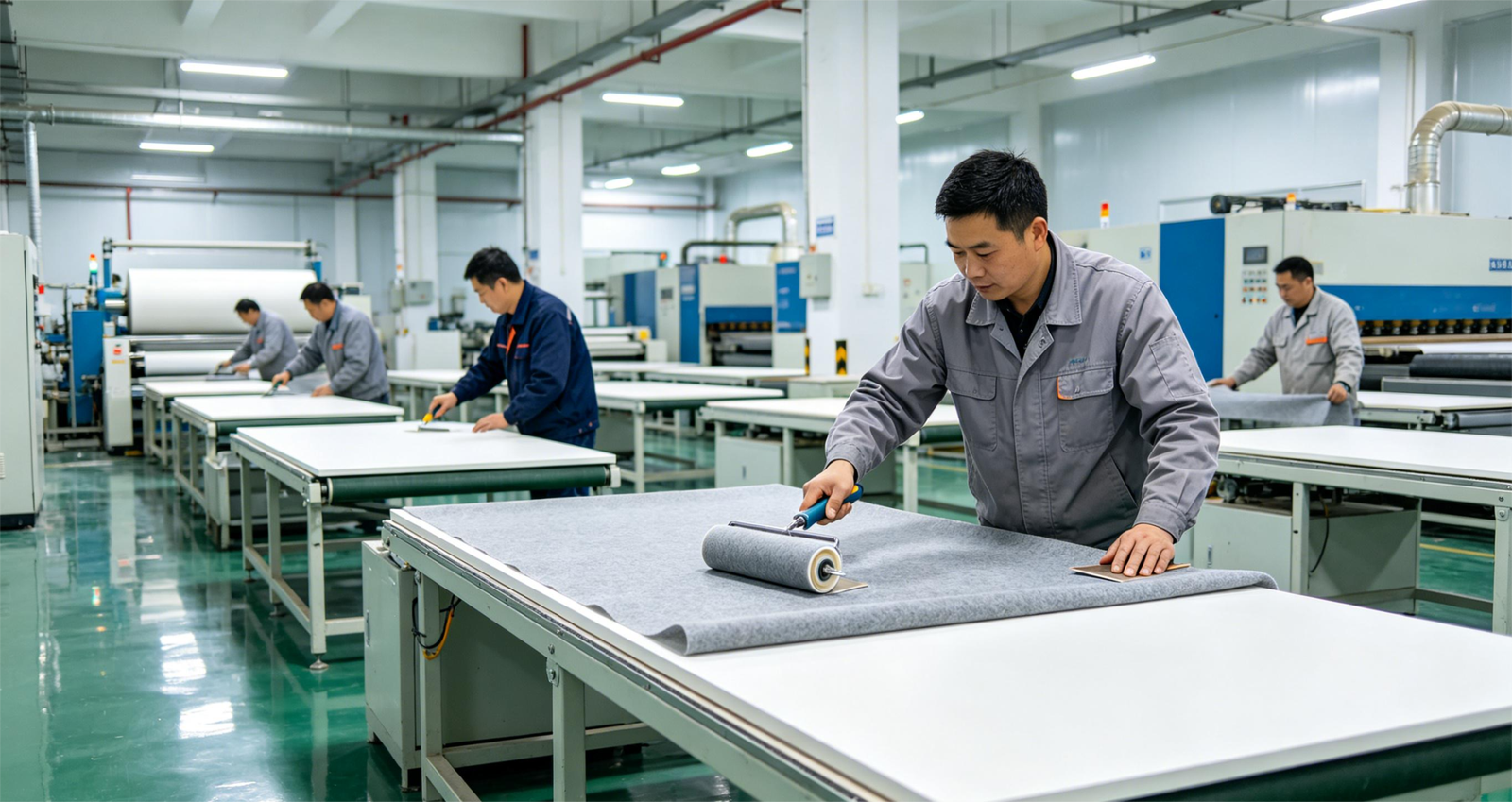
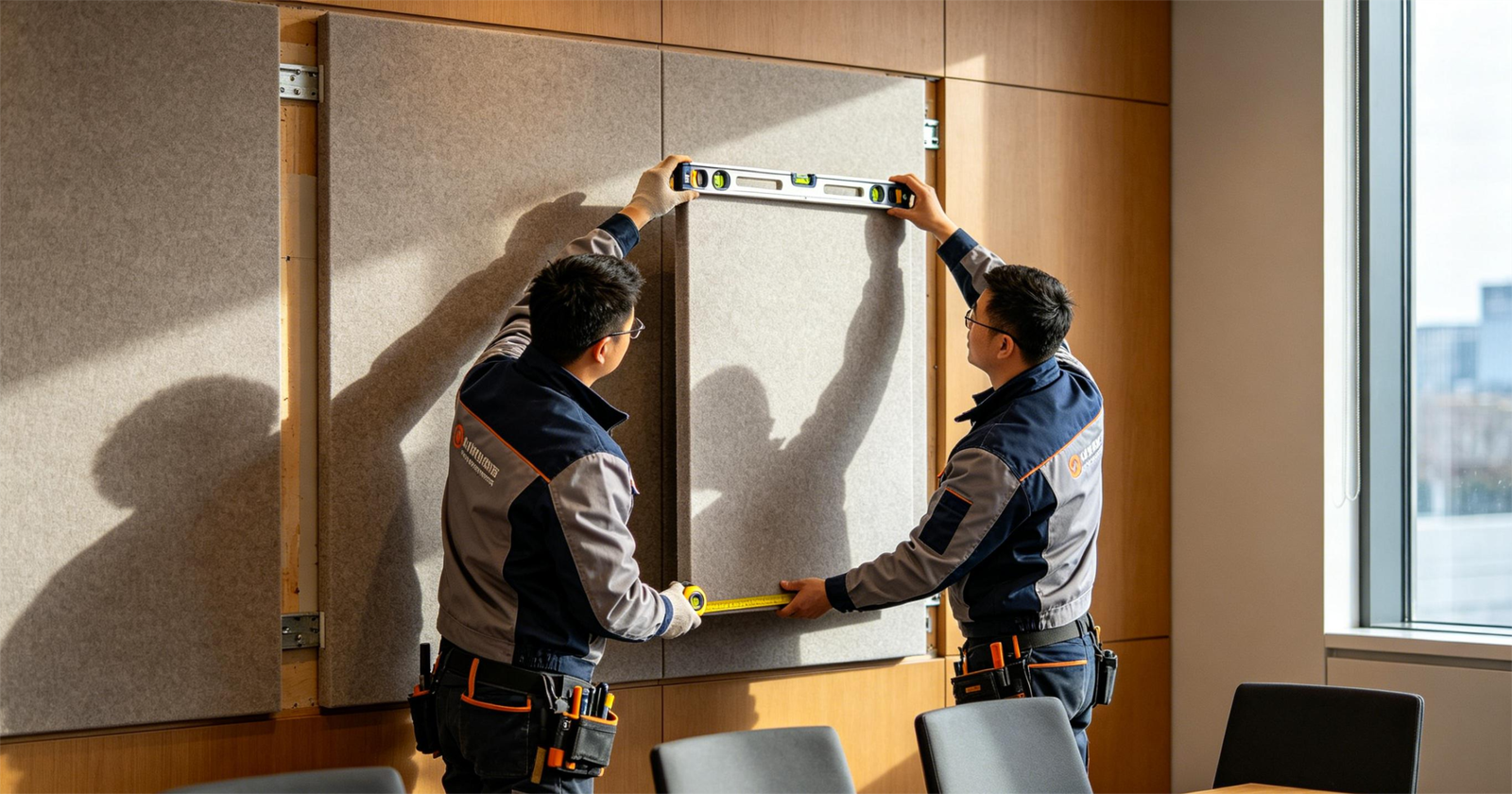

Acoustic panels are core porous sound-absorbing products used for indoor reverberation control. Professional acoustic panel manufacturing follows strict acoustic physics and material structure design. Simply putting soft materials together cannot guarantee stable NRC performance. Qualified acoustic panels rely on reasonable porosity, airflow resistance, and structural density to achieve effective sound energy dissipation.
Core Acoustic Design Principle
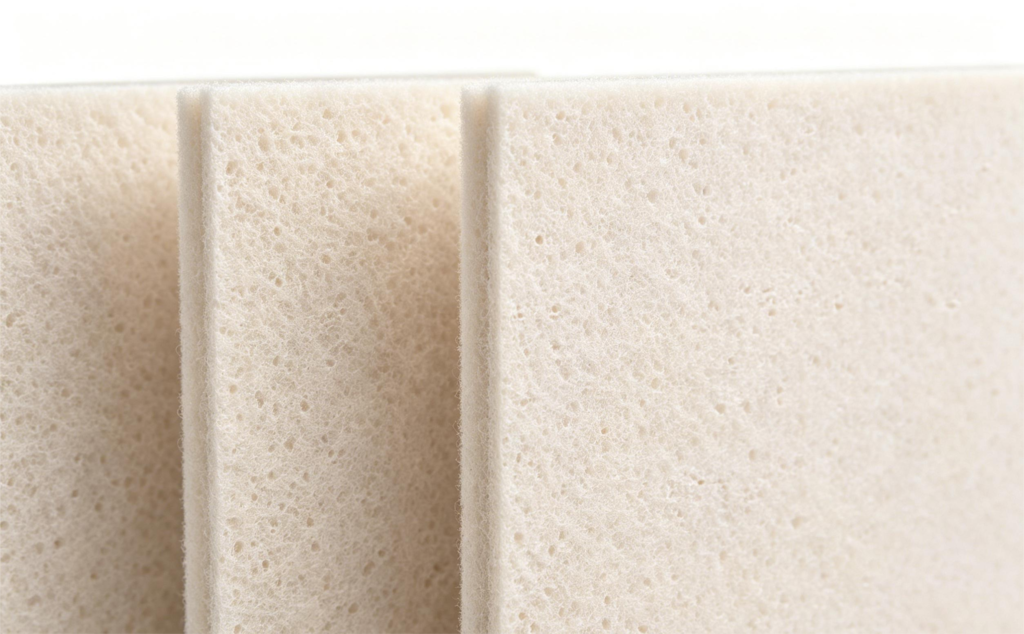
The working mechanism of acoustic panels depends on open-pore structure. When sound waves enter the material interior, air vibration and friction convert acoustic energy into thermal energy. Professional production controls uniform pore opening rate and internal fiber arrangement to ensure stable absorption performance across mid and high frequencies (500Hz–4000Hz). Overly dense structures block sound penetration, while overly loose structures cause insufficient energy loss.
Professional Raw Material Selection
High-standard acoustic panels mainly adopt high-purity polyester fiber (PET) or ultra-fine glass fiber. These materials feature stable airflow resistance, fire retardancy, environmental safety and long-term aging resistance. Low-density sponge or ordinary cotton cannot be used for formal acoustic engineering due to unstable pore structure and poor fire performance.
Standard Manufacturing Process
First, raw fiber materials are opened, mixed and layered to form a uniform fiber cushion. This step ensures consistent internal porosity and avoids local acoustic performance deviation.
Second, high-temperature hot-press molding is applied to fix the fiber structure. Professional panels use precise temperature and pressure control to maintain stable micro-pores without closing internal channels.
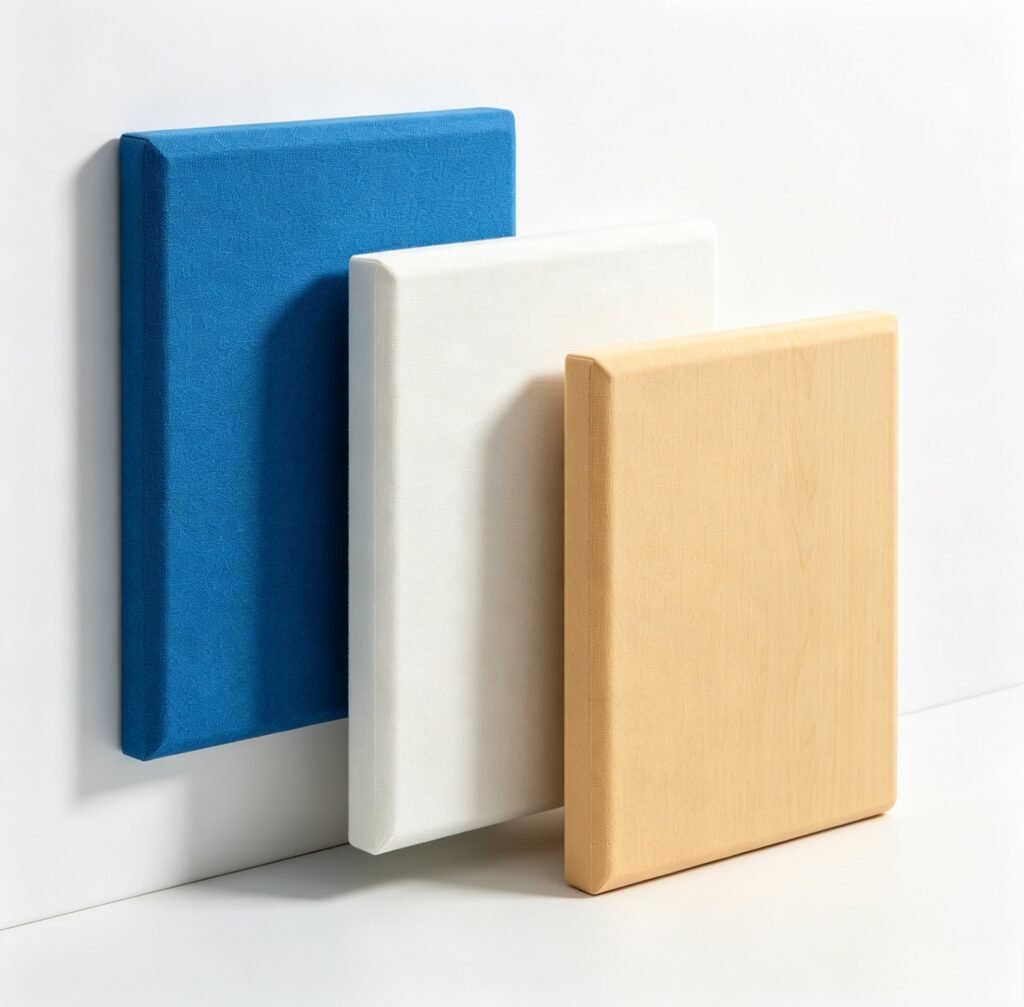
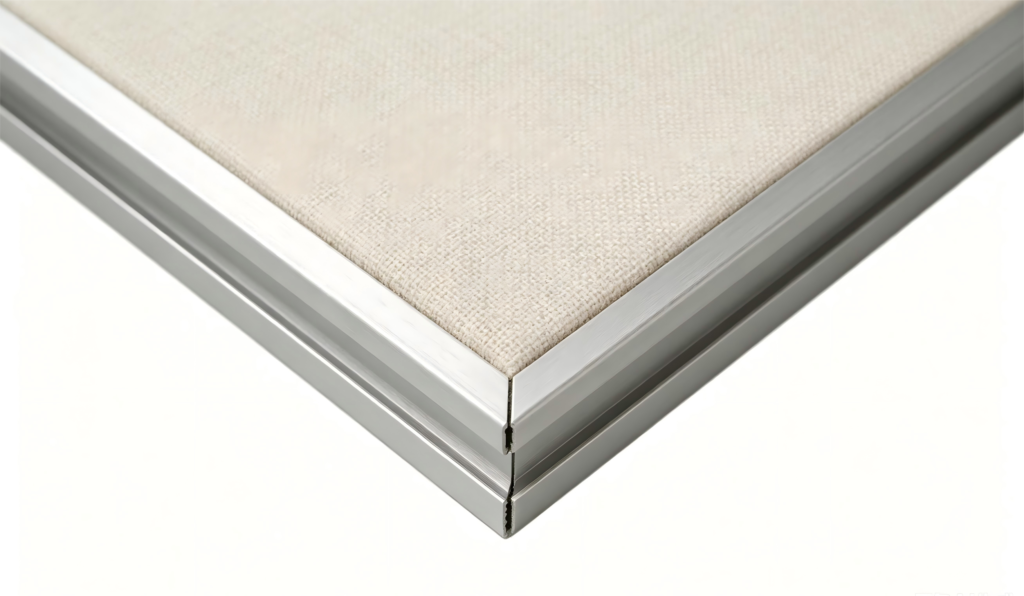
Third, surface finishing and edge sealing are completed. Breathable fabric or micro-perforated veneer is used for surface protection. The surface layer must be sound-transparent and cannot block incoming sound waves.
Finally, finished product testing is conducted, including NRC noise reduction coefficient, fire rating, density and thickness calibration to meet commercial acoustic engineering standards.
Key Factors Affecting Absorption Performance
Panel thickness and density determine absorption bandwidth. Thicker panels improve low-frequency absorption capability, while standard 9mm–24mm panels are optimal for conventional office and conference room noise control. Uniform internal fiber distribution ensures no acoustic dead zones.
Conclusion
Making professional acoustic panels is a standardized industrial process based on acoustic parameters, not simple manual assembly. Scientific material matching, stable porous structure and sound-transparent surface treatment ensure reliable NRC performance and consistent indoor acoustic optimization effects.
If you have more question, please feel free to contact with us, Thank You !
Whatsapp/WeChat: +86-13924816467/18819285749
Email: rdsugkf@gmail.com
Company Address: No. 122-1, Guangshao Road, Longtan Jubao Industrial Park, Conghua District, Guangzhou City
how can we help you
You can contact us any way that is convenient for you.
whatsapp:+86-17322789466
email: gsacousticss@gmail.com
New Products